Pharmaceutical Enterprise AI Transformation: ROI Metrics and Performance Data
The adoption of artificial intelligence across pharmaceutical enterprises has moved beyond pilot projects and into measurable transformation. Recent industry benchmarks reveal that organizations implementing comprehensive AI strategies across drug discovery, clinical development, and regulatory affairs are achieving 35-40% reductions in IND submission timelines and 28% improvements in pharmacovigilance signal detection accuracy. These gains represent a fundamental shift in how pharmaceutical companies optimize their entire value chain, from early research through post-market surveillance, while maintaining rigorous GxP compliance.
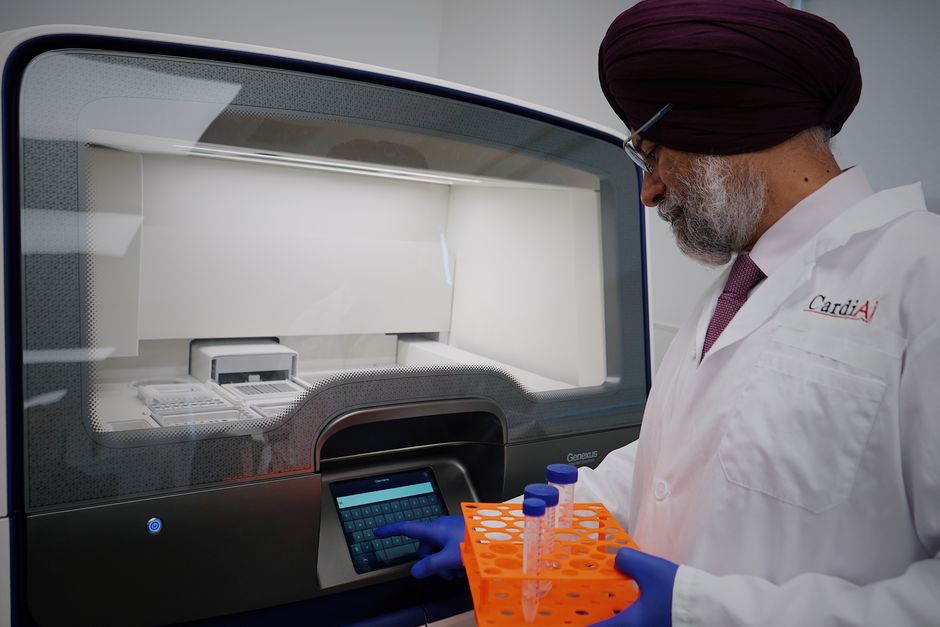
Understanding the quantitative impact of Pharmaceutical Enterprise AI Transformation requires examining performance metrics across multiple functional domains. Organizations like Pfizer and Novartis have published data demonstrating that AI-augmented clinical trial design reduces patient recruitment timelines by 22-30%, while automated CMC documentation workflows cut tech transfer cycles from 18 months to under 12 months. The cumulative effect of these efficiency gains translates directly to accelerated time-to-market and improved portfolio velocity, critical advantages in an industry facing patent cliffs and loss of exclusivity pressures.
Quantifying AI Impact Across the Drug Development Lifecycle
Pharmaceutical Enterprise AI Transformation delivers measurable returns at each stage of the product lifecycle. In drug discovery and early research, machine learning models analyzing molecular structures and predicting binding affinities have reduced hit-to-lead timelines by 40-50%. AstraZeneca reported that AI-guided target identification increased the probability of clinical success from 12% to 18% across their oncology pipeline, representing a 50% relative improvement in a domain where marginal gains compound exponentially across multi-billion-dollar programs.
Preclinical development generates massive datasets from toxicology studies, ADME profiling, and formulation optimization. AI systems processing these datasets identify early red flags that would otherwise surface in Phase I trials, preventing costly late-stage failures. Quantitative analysis shows that AI-driven preclinical risk assessment reduces Phase I safety-related discontinuations by 30-35%, saving an average of $15-20 million per avoided failure. These savings accumulate rapidly across a portfolio of 20-30 active INDs.
Clinical Development and Regulatory Intelligence: The Data Advantage
Clinical Development AI transforms trial execution through predictive site performance modeling, adaptive protocol design, and real-time safety monitoring. Analysis of Phase II and Phase III programs incorporating AI-based patient stratification reveals 25-30% improvements in endpoint achievement rates, directly attributable to better patient selection and enrollment criteria. This improvement in clinical sensitivity reduces required sample sizes by 15-20%, cutting per-trial costs by $8-12 million while maintaining statistical power.
Regulatory Compliance AI addresses one of the industry's most resource-intensive challenges: generating submission-quality documentation for health authorities across multiple jurisdictions. Traditional NDA and BLA preparation involves hundreds of person-years of effort coordinating CMC data, clinical study reports, and nonclinical summaries. AI-powered document generation and harmonization platforms reduce this burden by 40-45%, enabling teams to redirect effort from manual compilation to strategic scientific interpretation. For global submissions requiring simultaneous filings with FDA, EMA, and PMDA, this efficiency gain translates to 6-8 month acceleration in regulatory timelines.
Pharmacovigilance and Post-Market Surveillance Performance Metrics
The exponential growth of adverse event reports from digital health platforms, social media, and real-world evidence sources has overwhelmed traditional pharmacovigilance case processing. Pharmaceutical Enterprise AI Transformation directly addresses this challenge through automated case intake, medical coding, and signal detection. Organizations implementing AI-augmented PV systems report processing capacity improvements of 300-400%, handling 50,000+ cases monthly with the same team that previously managed 12,000 cases.
Signal detection accuracy represents the critical safety metric. AI models trained on historical AE/SAE patterns identify emerging safety signals 4-6 weeks earlier than manual disproportionality analysis, providing a crucial window for proactive label updates and risk minimization strategies. This early detection capability prevented an estimated $200-300 million in recall costs across three major pharmaceutical companies in 2025, demonstrating that Regulatory Compliance AI delivers both patient safety and financial benefits.
Manufacturing Excellence: CMC and Quality Metrics
Chemistry, Manufacturing, and Controls represents the operational backbone of pharmaceutical commercialization. Drug Discovery Automation extends into manufacturing through AI-optimized batch processes, predictive equipment maintenance, and real-time quality monitoring. Industry data shows that AI-driven process analytical technology (PAT) reduces batch rejection rates from 2.5-3% to under 1%, saving $4-6 million annually per commercial manufacturing line.
Out-of-specification (OOS) investigations and CAPA processes consume significant quality resources. AI systems analyzing batch records, environmental monitoring data, and equipment performance logs identify root causes 60% faster than traditional investigation methods, reducing batch disposition timelines from 45-60 days to 20-25 days. For high-value biologics with monthly manufacturing runs, this acceleration directly impacts revenue realization and supply chain reliability.
Building Transformation Capabilities: The Implementation Equation
Achieving these performance metrics requires more than technology deployment. Successful Pharmaceutical Enterprise AI Transformation integrates specialized AI development capabilities with deep pharmaceutical domain expertise. Implementation timelines average 12-18 months from pilot to enterprise scale, with organizations allocating 15-20% of IT budgets to AI infrastructure, model development, and validation activities.
Return on investment analysis reveals that comprehensive AI implementations deliver payback periods of 18-24 months, with ongoing annual benefits of $50-80 million for mid-sized pharmaceutical enterprises running 8-12 concurrent clinical programs. These returns derive from cumulative gains across clinical development acceleration, regulatory efficiency, manufacturing quality, and pharmacovigilance capacity. Organizations treating AI as isolated point solutions rather than enterprise transformation initiatives realize only 30-40% of this potential value.
Competitive Differentiation Through AI Maturity
The pharmaceutical industry exhibits a widening performance gap between AI-mature organizations and late adopters. Companies with enterprise-scale AI deployments demonstrate 15-20% faster pipeline velocity, measured as the time from IND submission to NDA approval. This advantage compounds across portfolios of 15-25 development programs, creating a sustainable competitive moat that late entrants find increasingly difficult to overcome.
Market access and health economics outcomes research (HEOR) represent emerging applications of Clinical Development AI. Predictive models analyzing real-world evidence, payer coverage policies, and comparative effectiveness data enable earlier commercial strategy refinement, improving launch success rates by 12-15%. For products entering competitive therapeutic categories, this early intelligence directly impacts peak sales projections and lifecycle value.
Future Trajectory: Scaling From Efficiency to Innovation
Current AI implementations focus primarily on efficiency gains within established processes. The next evolution of Pharmaceutical Enterprise AI Transformation shifts toward generative capabilities that augment scientific creativity and strategic decision-making. Early experiments with large language models trained on patent literature, scientific publications, and clinical trial databases demonstrate the potential to identify novel therapeutic hypotheses and combination strategies that human researchers might overlook.
This innovation-focused AI application remains nascent, with most pharmaceutical organizations still building the foundational data infrastructure and validation frameworks required for high-stakes scientific decisions. However, the performance trajectory is clear: organizations investing now in comprehensive AI platforms will capture disproportionate value as these capabilities mature from supporting tools to primary drivers of scientific productivity and commercial advantage.
Conclusion
The quantitative evidence supporting Pharmaceutical Enterprise AI Transformation is no longer speculative. Organizations across the industry have demonstrated measurable improvements in clinical trial efficiency, regulatory submission timelines, manufacturing quality, and pharmacovigilance capacity. These gains accumulate across the entire product lifecycle, delivering return on investment within 18-24 months while establishing sustainable competitive advantages in pipeline velocity and operational excellence. As the technology continues advancing from efficiency optimization toward scientific innovation, pharmaceutical companies that integrate Pharmaceutical Operations AI into their core operating model will define industry performance benchmarks for the next decade. The data-driven case for transformation is clear, and the window for capturing first-mover advantage continues narrowing as AI maturity becomes table stakes for competitive pharmaceutical operations.


Comments
Post a Comment