AI Deployment in Electronics Manufacturing: Deep-Dive into SMT Line Optimization
Surface mount technology lines represent the operational heartbeat of contract electronics manufacturing, yet optimizing these complex production systems remains one of the most challenging aspects of facility management. An automotive-grade SMT line handles dozens of simultaneous variables: paste volume and viscosity, placement accuracy across 50,000+ components per hour, thermal profile precision within ±2°C across multiple zones, and real-time defect detection at inspection stations. Traditional optimization relies on experienced process engineers manually correlating failure modes to root causes, a time-intensive approach that struggles to keep pace with increasing product complexity and shorter NPI cycles. The emergence of AI-driven optimization specifically engineered for SMT environments is transforming how leading EMS providers achieve and sustain world-class FPY.
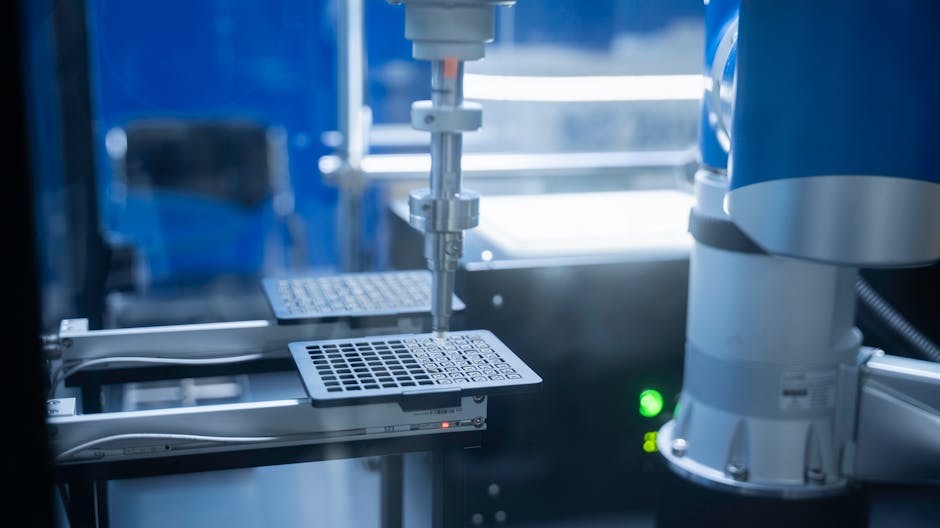
The application of AI Deployment in Electronics Manufacturing to SMT operations differs fundamentally from generic manufacturing AI because of the unique process physics involved. Solder paste rheology, component thermal mass variation, and pad geometry interactions create non-linear relationships that resist traditional statistical process control. Companies like Jabil and Flex have invested heavily in AI systems purpose-built for SMT because these systems can model the interaction effects between printing parameters, placement offsets, and reflow profiles in ways that conventional process control cannot. Understanding how these specialized applications function reveals both their transformative potential and the specific prerequisites for successful implementation.
Stencil Printing Optimization Through AI-Driven SPI Analysis
Solder paste printing represents the single greatest contributor to SMT defects, accounting for approximately 60% of placement-related failures according to IPC industry data. Traditional SPI systems flag out-of-specification paste deposits but provide limited guidance on root cause or corrective action. AI-enhanced SPI takes a fundamentally different approach by analyzing paste volume, area, and height data across the entire board to identify systematic patterns indicative of specific failure modes.
Consider a typical scenario: SPI detects insufficient paste volume on a cluster of fine-pitch QFN pads in one board corner. A conventional response involves manual stencil inspection and possible aperture rework, consuming 4-6 hours of engineering time and line downtime. An AI system trained on paste deposition physics analyzes the spatial pattern and correlates it with squeegee pressure distribution data, immediately identifying that squeegee deflection during print stroke is causing uneven paste release in that board region. The system recommends a specific pressure reduction in zones 3 and 4, which the operator implements in under 10 minutes. First article inspection confirms the issue is resolved without stencil rework or extended troubleshooting.
This capability depends on the AI system having learned the relationship between squeegee mechanics, stencil aperture design, and paste release behavior through training on thousands of prior printing events across multiple product families. Generic machine learning models cannot deliver this performance because they lack the domain-specific training data and physics-aware algorithms. Facilities implementing AI for SMT Operations must ensure their vendor's solution was developed specifically for electronics assembly, not adapted from generic computer vision or process control applications.
Placement Accuracy and Feeder Optimization
Modern pick-and-place machines achieve placement rates exceeding 80,000 CPH, but this speed is meaningless if placement accuracy degrades, causing opens, tombstoning, or shorts after reflow. Placement accuracy depends on feeder mechanical condition, vision system calibration, nozzle wear, and component packaging quality. Traditionally, placement offset errors are detected during AOI and corrected through manual teach routines, a reactive process that allows defects to propagate through multiple boards before correction.
AI systems monitoring real-time placement data from machine vision cameras can detect systematic offset patterns before they produce reflow defects. By analyzing the distribution of placement corrections the machine's vision system makes during each pick-place cycle, AI algorithms identify when a specific feeder is developing mechanical play or when a component reel has packaging dimensional issues. The system flags the issue and automatically adjusts placement offsets for that component while alerting maintenance to schedule feeder inspection during the next changeover.
A leading medical device contract manufacturer implemented this approach across six high-mix SMT lines and reduced placement-related defects by 54% within four months. The key was continuous learning: as the AI system processed more placement events, it refined its ability to distinguish normal variation from early indicators of developing issues. The system now predicts feeder maintenance needs with 89% accuracy three days before failure, allowing planned intervention during scheduled changeovers rather than emergency line stops.
Reflow Profile Development and Adaptive Control
Thermal profiling for reflow ovens has traditionally been a manual, time-intensive process requiring multiple test runs with thermocouples attached to representative assemblies. Process engineers iteratively adjust zone temperatures and conveyor speed to achieve a profile that satisfies paste manufacturer specifications while accommodating the thermal mass distribution of the specific assembly. For complex boards with both large connectors and fine-pitch BGAs, finding an acceptable profile can require 8-12 iterations.
AI-driven profile development accelerates this process by simulating thermal behavior based on board geometry, component placement data from the CAD file, and material properties. The system generates an initial profile prediction that typically requires only 2-3 refinement iterations to reach production acceptance. More significantly, once in production, AI-enabled adaptive control monitors thermocouples embedded in the board carrier and makes real-time zone temperature micro-adjustments to compensate for ambient temperature variation, component thermal mass differences between board revisions, and gradual heating element degradation.
A Tier-1 automotive electronics supplier implemented adaptive reflow control and achieved remarkable stability improvements. Cp/Cpk for critical thermal parameters improved from 1.21/1.08 to 1.67/1.58, directly contributing to a 7% FPY improvement on high-complexity assemblies. The system's ability to maintain tight process control despite normal production variation reduced the frequency of profile revalidation from every 500 boards to every 2,000 boards, freeing process engineering capacity for value-added NPI work.
Integrating AI Across the SMT Process Chain
While individual process step optimization delivers measurable value, the greatest impact comes from integrating AI across the entire SMT chain: printing, placement, inspection, and reflow. This integration enables closed-loop control where learnings from downstream inspection inform upstream process adjustments in near-real-time. Achieving this integration requires sophisticated generative AI integration that connects disparate equipment systems and data formats into a unified analytical framework.
Consider a complete cycle: SPI detects a paste volume trend approaching lower specification on specific pad geometries. The AI system correlates this with recent placement data showing slight component shift on those same locations post-reflow, detected by AOI. Rather than waiting for defects to manifest, the system identifies that paste volume is marginal but still in-spec, and component placement is marginal but still in-spec, yet the combination will likely produce defects after reflow. The system automatically increases paste volume by 8% for those apertures and adjusts placement offset by 0.05mm, preventing defects that would have appeared two hours later in production.
This multi-step correlation and preemptive adjustment represents AI's fundamental value in SMT: managing interaction effects between process steps that human engineers cannot track in real-time across thousands of daily production events. A contract manufacturer producing 15,000 assemblies daily across multiple product families cannot manually correlate SPI, placement, AOI, and reflow data at this granularity. AI systems excel at exactly this type of high-volume, multi-dimensional pattern recognition.
Component-Specific AI Models for High-Reliability Applications
Not all components and assemblies carry equal risk. High-reliability applications in medical, aerospace, and automotive segments demand near-zero DPPM for safety-critical functions. AI in NPI for these applications focuses on component-specific risk modeling rather than generic line optimization. The system maintains detailed performance histories for every component type: which pad geometries are most defect-prone, which reflow profiles produce optimal intermetallic formation for specific lead finishes, which placement nozzle types minimize die stress for large BGAs.
When a new high-reliability product enters NPI, the AI system analyzes the BOM and flags components with historically elevated failure rates or tight process windows. It recommends specific process parameters based on similar components in prior programs, dramatically compressing the trial-and-error phase of process development. For a recent aerospace electronics NPI, this approach reduced first article build iterations from seven to three, saving five weeks on a 14-week NPI timeline. The customer achieved PPAP approval on schedule, avoiding a late-delivery penalty that would have exceeded the entire year's AI software licensing cost.
Data Infrastructure Requirements for SMT AI Success
Successful AI Deployment in Electronics Manufacturing for SMT applications requires robust data infrastructure that most facilities underestimate during planning. The AI system needs access to machine-level process data at sub-second resolution, inspection images and measurements from all SPI and AOI stations, maintenance logs with component-level failure records, and product genealogy linking every board to specific material lots and process parameters.
Many EMS facilities discover mid-implementation that their existing MES lacks the data granularity or API accessibility required for effective AI training. Upgrading data collection infrastructure can add 30-40% to the total project cost, a surprise that derails projects when not budgeted upfront. Facilities that conduct thorough data readiness assessments before vendor selection avoid this pitfall and achieve faster time-to-value.
The data volume is substantial: a single SMT line generates approximately 2.3 GB of process and inspection data per shift. For a 12-line facility running three shifts, this represents 100 GB daily or 36 TB annually. The AI system must store, index, and query this data efficiently to support both real-time control and historical trend analysis. Cloud-based architectures offer scalability advantages but introduce latency incompatible with real-time process control. Hybrid architectures with edge computing for real-time control and cloud storage for long-term analytics represent the current best practice, though they add architectural complexity.
Organizational Change Management for SMT AI Adoption
Technology readiness is necessary but insufficient for successful SMT AI deployment. Organizational readiness determines whether the technology delivers sustained value or becomes shelfware after initial enthusiasm fades. SMT operators and process engineers must understand what the AI system is doing and why, or they will revert to manual methods when AI recommendations conflict with their experience.
Leading implementations invest heavily in training and change management. Operators receive 16-24 hours of structured training on AI system operation, not just button-pushing but conceptual understanding of what the algorithms detect and recommend. Process engineers receive deeper training on model performance monitoring and intervention protocols when AI recommendations appear questionable. This investment in human capital ensures the organization can effectively partner with the AI system rather than passively accepting or reflexively rejecting its guidance.
Conclusion
The application of AI Deployment in Electronics Manufacturing to SMT line optimization represents one of the most mature and impactful use cases in the industry today. Unlike speculative applications still seeking product-market fit, AI for SMT delivers measurable FPY improvements, cycle time reductions, and cost savings at facilities that approach implementation systematically. Success requires domain-specific AI solutions engineered for SMT process physics, robust data infrastructure capable of supporting real-time control, and organizational investment in training and change management. Facilities treating SMT AI as a strategic capability rather than a point solution achieve the most significant results. For EMS providers facing relentless customer pressure for faster NPI, higher quality, and lower costs, building this capability around a structured AI Implementation Framework offers one of the few remaining opportunities for sustainable competitive differentiation in an increasingly commoditized market.


Comments
Post a Comment