Production Line Automation: Real Stories from the Factory Floor
Three years ago, I walked into a facility running what they believed was a modern production line. The reality was jarring—machines sat idle for hours waiting on manual approvals, quality checks bottlenecked at a single station, and the maintenance team operated purely on reactive schedules. The leadership knew they needed change but feared the disruption that transformation might bring. What happened next taught me invaluable lessons about implementing Production Line Automation that no textbook could capture.
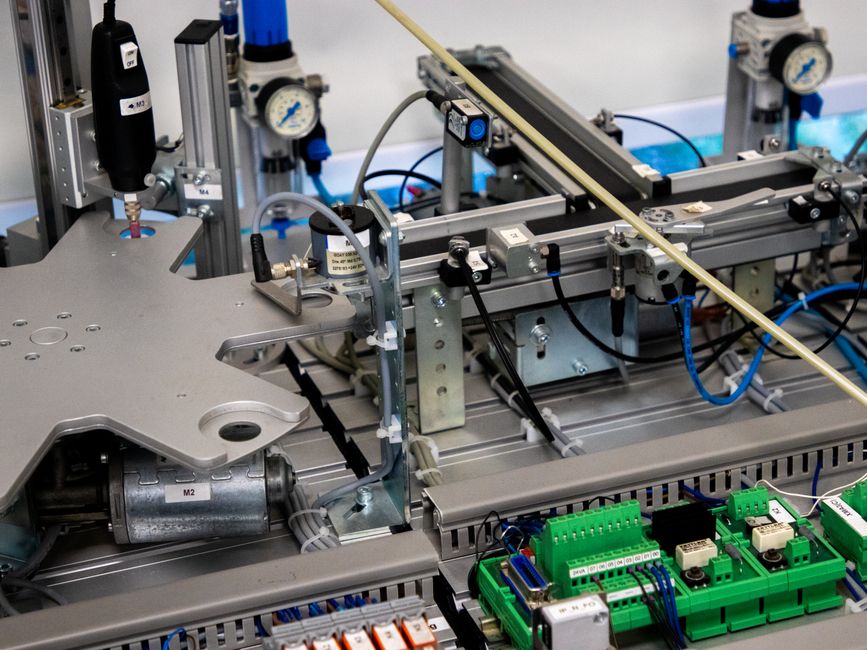
The journey toward Production Line Automation rarely follows a straight path, and our experience proved that truth emphatically. The first lesson emerged during our initial assessment: the gap between perceived readiness and actual preparedness was staggering. Teams assumed their existing infrastructure could support advanced automation, but legacy systems couldn't communicate with modern smart sensors. That disconnect cost us two months and forced a complete infrastructure audit before any production changes could begin.
The Foundation Lesson: Infrastructure Reality Checks
Our first major setback came from underestimating the importance of connectivity infrastructure. When we attempted to integrate Robotic Process Automation into the assembly line, we discovered that the facility's network couldn't handle the data throughput required for real-time communication between machines. Production throughput targets seemed achievable on paper, but the physical network architecture became our primary constraint.
The plant manager, a veteran with twenty-five years of experience, initially resisted the network overhaul. His concern was legitimate—upgrading infrastructure meant temporary production slowdowns and budget reallocation. However, once we demonstrated how IIoT connectivity would enable Predictive Maintenance and eliminate the recurring equipment failures that plagued his third shift, his perspective shifted. That conversation revealed a crucial insight: stakeholder buy-in requires speaking to their specific pain points, not generic automation benefits.
We partnered with specialists in custom AI development to build monitoring systems that could work within our transitional infrastructure while we upgraded the network backbone. This phased approach allowed production to continue while laying groundwork for more sophisticated automation.
Production Line Automation and the Human Factor
The second transformative lesson centered on workforce engagement. When we announced the automation initiative, floor supervisors immediately worried about job security. One shift leader with seventeen years at the facility asked me directly whether robots would replace his team. His question wasn't hostile—it was genuinely anxious, and dozens of workers shared his concern.
We made a strategic decision that changed everything: involve the floor workers in designing the automated workflows. Instead of consultants dictating processes, we held workshops where machine operators explained their daily challenges, bottlenecks, and the workarounds they'd developed over years of experience. This approach uncovered insights no external assessment could provide. For instance, operators on Line 3 had developed an informal rotation system to manage equipment that overheated during extended runs—knowledge that became critical for programming thermal monitoring into our automated systems.
Smart Factory Integration succeeded because we positioned automation as augmentation, not replacement. Workers transitioned from repetitive manual tasks to oversight roles, monitoring dashboards that displayed OEE metrics, cycle times, and quality indicators in real time. The shift leader who initially questioned the initiative became our strongest internal advocate after seeing how automation eliminated the tedious paperwork that consumed two hours of every shift.
Training That Actually Works
Training presented another unexpected challenge. Standard classroom sessions failed miserably because they disconnected learning from application. Workers sat through presentations about Manufacturing Execution Systems but couldn't connect abstract concepts to their daily reality. We scrapped that approach and implemented hands-on training directly on the production floor during scheduled maintenance windows.
Operators learned by doing—programming simple automated sequences, adjusting sensor thresholds, and troubleshooting simulated failures. The engagement level transformed immediately. One technician who struggled in classroom settings became exceptionally proficient at diagnosing sensor calibration issues because he could see immediate cause-and-effect relationships on actual equipment.
The Supply Chain Wake-Up Call
Four months into implementation, we hit a crisis that exposed a blind spot in our planning. Production Line Automation had successfully increased our output capacity by thirty-eight percent, but we hadn't coordinated with supply chain teams. Suddenly, we were producing faster than our inventory management automation could source materials, and finished goods piled up because order fulfillment routing hadn't scaled to match production velocity.
This mismatch taught us that production automation cannot exist in isolation. We convened cross-functional teams spanning production, procurement, warehousing, and logistics. Together, we mapped the entire value stream and identified where automation needed to extend beyond the production floor. Resource allocation planning became a joint effort, with real-time data from production systems feeding directly into procurement forecasts and warehouse management systems.
The integration revealed another insight: digital twin modeling proved invaluable for testing system-wide changes before implementation. We built a digital replica of our entire operation—from raw material receipt through final product shipment—and simulated various scenarios. When we proposed implementing cross-docking operations for certain high-velocity products, the digital twin showed us that our loading dock configuration would create congestion during peak hours. We redesigned the physical layout before breaking ground, avoiding what would have been a costly mistake.
Real-Time Quality Control: The Game Changer
Perhaps the most dramatic transformation came from implementing real-time quality control integrated with automated production. Previously, quality checks happened at the end of production runs, meaning defects weren't discovered until hundreds or thousands of units had been produced. Scrapping entire batches devastated both timelines and costs.
We installed vision systems and smart sensors at critical points throughout the production line, creating quality assurance feedback loops that detected deviations immediately. Machine learning algorithms learned to distinguish between acceptable variation and true defects with impressive accuracy. When a sensor detected a parameter drift that historically preceded defects, the system automatically adjusted machine settings or flagged operators for intervention.
The financial impact was substantial—scrap rates dropped from 4.2 percent to 0.7 percent within six months. More importantly, we avoided a potential catastrophe when the system caught a calibration error that would have resulted in a costly product recall. The quality engineer who had initially been skeptical of automated inspection told me that moment converted him completely—human inspectors would never have caught that subtle deviation before defective products reached customers.
Unexpected Benefits from Data Transparency
Real-time quality control also created unexpected cultural benefits. When quality data became immediately visible to everyone—from operators to executives—accountability increased organically. Operators took greater ownership because they could see exactly how their actions affected downstream quality metrics. Management made faster decisions because they had access to actual production data rather than waiting for end-of-shift reports.
Predictive Maintenance: From Skepticism to Essential
Maintenance teams were initially the most skeptical group. The maintenance supervisor argued that his technicians knew the equipment better than any algorithm could. He had decades of experience reading machine sounds, vibrations, and patterns that signaled impending failures. Why would he trust software predictions?
We didn't try to replace his expertise—we enhanced it. Predictive Maintenance systems collected data from accelerometers, temperature sensors, and current monitors, applying machine learning to identify patterns that preceded equipment failures. Instead of presenting predictions as mandates, we delivered them as recommendations for the maintenance team to evaluate.
The breakthrough came when the system predicted a bearing failure on a critical press three days before the maintenance supervisor's planned inspection. He investigated, confirmed the prediction, and replaced the bearing during scheduled downtime. That press had failed catastrophically six months earlier, causing eighteen hours of unplanned downtime and $47,000 in emergency repairs. Preventing that scenario with a $300 bearing replacement and two hours of planned maintenance made believers out of the entire maintenance department.
Over the following year, predictive maintenance reduced unplanned downtime by sixty-three percent. Maintenance shifted from reactive firefighting to strategic resource allocation planning. Technicians scheduled repairs during planned production breaks, parts inventory became more efficient because procurement knew what components would be needed weeks in advance, and overall equipment effectiveness improved significantly.
Lessons That Transcend Individual Projects
Looking back, several universal truths emerged from this implementation. First, technology is the easy part—organizational change management determines success or failure. Every technical challenge we faced had a solution, but resistance rooted in fear, misunderstanding, or legitimate concerns about disruption required careful, sustained attention.
Second, data-driven process adjustments create competitive advantages that compound over time. Once we established feedback loops connecting production data to continuous improvement processes, optimization became self-reinforcing. Teams identified opportunities, tested hypotheses using production data, measured results, and iterated—creating a culture of agile manufacturing that extended far beyond the initial automation project.
Third, Production Line Automation delivers maximum value when integrated across the entire value chain. Isolated improvements in production create bottlenecks elsewhere. Companies like Siemens and Rockwell Automation have built comprehensive ecosystems specifically because fragmented automation delivers fragmented results.
Conclusion: The Journey Continues
Three years after that first factory walk-through, the transformation is remarkable. The same facility now operates as a showcase for what's possible when Production Line Automation is implemented thoughtfully, with attention to both technological capability and human factors. Production throughput has increased by fifty-four percent, quality defects have dropped by eighty-three percent, and unplanned downtime has virtually disappeared. Perhaps most tellingly, employee satisfaction scores increased because workers feel empowered rather than threatened by technology.
The lessons from this experience continue shaping how we approach new implementations. Every facility has unique challenges, cultures, and constraints, but the fundamental principles remain consistent: engage stakeholders early, integrate across the value chain, invest in infrastructure, prioritize training, and view automation as augmentation of human capability rather than replacement. Organizations seeking to navigate similar transformations benefit from proven Intelligent Automation Solutions that balance technological sophistication with practical implementation realities, creating sustainable competitive advantages in an increasingly automated manufacturing landscape.


Comments
Post a Comment