How Generative AI Patient Care Actually Works: A Clinical Operations View
Behind every seamless patient interaction and every precisely calibrated treatment plan lies a sophisticated architecture of data pipelines, inference engines, and clinical validation layers. For those of us working in patient care optimization and clinical workflow design, the promise of generative AI has evolved from theoretical to operational—but understanding exactly how these systems integrate into real care delivery requires looking beyond the marketing materials and into the technical and clinical workflows that make Generative AI Patient Care function at scale.
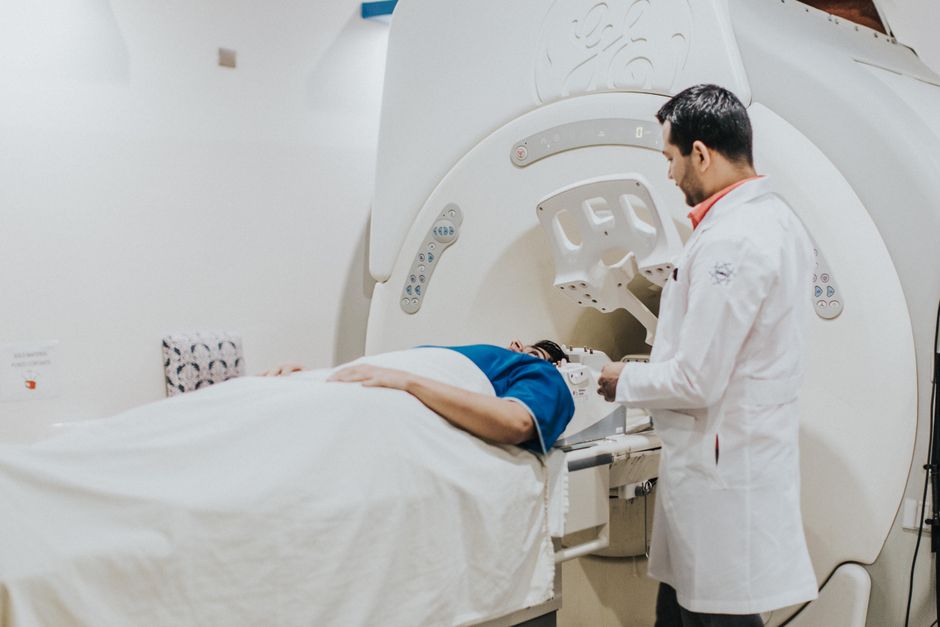
The mechanics of Generative AI Patient Care begin long before a patient ever sees a recommendation or receives a personalized message. The foundation sits in the data layer—a continuous ingestion process pulling structured and unstructured information from EHR systems, health information exchanges, lab interfaces, imaging repositories, and increasingly from remote patient monitoring devices and patient-reported outcomes platforms. Unlike traditional rule-based clinical decision support systems that operate on predefined logic trees, generative models require training corpuses that span millions of clinical encounters, creating embeddings that capture nuanced patterns across diagnoses, treatments, outcomes, and demographic variables.
The Data Orchestration Layer: Where Clinical Reality Meets Machine Learning
In practice, deploying Generative AI Patient Care means building a robust data orchestration layer that can harmonize information from disparate sources while maintaining HIPAA compliance and ensuring data provenance. At institutions like Cleveland Clinic and Mayo Clinic, this typically involves creating a dedicated clinical data warehouse that serves as the single source of truth. Raw data from Epic, Cerner, or other EHR platforms flows through ETL pipelines that standardize terminologies—mapping local codes to SNOMED CT, LOINC, RxNorm, and ICD-10—so the generative model can reason consistently across encounters.
What makes this challenging is the velocity and variety of healthcare data. Lab results arrive every few seconds, clinical notes get dictated and transcribed throughout shifts, medication orders stream in continuously, and telemonitoring data from chronic disease patients uploads every few minutes. The orchestration layer must handle this in near real-time for applications like Clinical Decision Support AI, where recommendations need to surface at the point of care, not hours later during a batch process.
Feature Engineering for Clinical Context
Once data is harmonized, feature engineering transforms raw records into clinically meaningful representations. This is not about simple field extraction—it requires domain expertise to construct features that capture temporal sequences (how did the patient's creatinine trend over the past week?), treatment trajectories (what was the escalation pattern for heart failure medications?), and contextual relationships (how does this patient's social determinants profile correlate with adherence likelihood?).
In our implementations, we build feature sets that include:
- Longitudinal vital sign trajectories with statistical summaries and anomaly flags
- Medication exposure histories with dosing patterns, switches, and discontinuation reasons
- Comorbidity indices calculated from diagnosis codes across multiple encounters
- Clinical note embeddings generated from transformer models trained on medical literature
- Care team composition and communication frequency metrics
- Patient engagement scores derived from portal usage, appointment attendance, and survey completion
These features feed into generative models that can then produce contextually relevant outputs—whether that is drafting patient education materials, suggesting differential diagnoses, generating care plan summaries, or predicting which patients are at risk for care gaps.
The Inference Architecture: Real-Time Generation in Clinical Workflows
The inference layer is where Generative AI Patient Care transitions from data science project to clinical tool. This requires infrastructure capable of serving model predictions with latencies measured in hundreds of milliseconds, not seconds or minutes. When a clinician opens a patient chart, any AI-generated insights must appear instantly—waiting even three seconds will cause providers to navigate away or ignore the recommendation entirely.
We typically deploy a microservices architecture where specialized inference endpoints handle different generative tasks. One service might focus on AI Patient Engagement, generating personalized outreach messages based on a patient's health literacy level, preferred communication channel, and current care gaps. Another handles clinical documentation, using the generative model to draft progress notes from voice dictation or structured data entry, automatically populating appropriate sections while flagging areas needing clinician review.
Model Selection and Task-Specific Fine-Tuning
Not every generative task requires the largest foundation model. For routine patient communication or appointment reminders, we often use smaller, task-specific models fine-tuned on institutional communication patterns and outcome data. These models train on thousands of historical messages paired with engagement outcomes—did the patient respond, schedule an appointment, complete a survey, or achieve the care goal?
For more complex tasks like clinical decision support or treatment plan generation, we deploy larger language models that have been fine-tuned on medical literature, clinical guidelines, and de-identified institutional case histories. These models undergo extensive validation—not just for accuracy, but for safety, bias, and clinical appropriateness. Every recommendation must include citations to source guidelines or evidence, enabling clinicians to verify reasoning chains before acting on suggestions.
Organizations pursuing enterprise AI solution development often establish dedicated clinical validation teams that include physicians, nurses, pharmacists, and patient advocates. These teams review model outputs across diverse patient populations, testing for potential disparities and ensuring recommendations align with institutional care protocols and quality metrics.
Integration Points: Embedding AI into Care Coordination Workflows
The true test of Generative AI Patient Care is not whether it can produce impressive outputs in isolation, but whether it integrates seamlessly into the dozens of workflows that comprise modern care delivery. This means building bidirectional interfaces with EHR systems, care management platforms, telehealth infrastructure, and population health analytics tools.
In practice, integration happens through multiple mechanisms. For synchronous workflows—like a clinician reviewing a patient during an office visit—we use EHR-embedded applications that call generative APIs and display results within the native interface. These applications respect EHR context, automatically pulling the current patient ID, encounter type, and relevant clinical data without requiring redundant lookups.
Asynchronous Care Coordination Use Cases
For asynchronous workflows—like population health outreach or care gap closure—generative models operate in batch mode, processing cohorts of patients overnight and queuing recommended actions for care coordinators to review the next morning. A typical workflow might identify all diabetic patients with HbA1c above 8.0 who have not had a follow-up appointment in 90 days, then generate personalized outreach messages for each patient that reference their specific barriers (transportation, work schedule, health literacy) and propose tailored solutions.
Care Coordination AI extends beyond messaging to include referral management, transition planning, and multidisciplinary care team communication. When a patient is discharged from the hospital, generative models can draft comprehensive handoff summaries for the primary care physician, highlighting key clinical events, medication changes, pending tests, and recommended follow-up actions—all generated from the hospital EHR data but formatted for outpatient consumption.
Monitoring, Validation, and Continuous Improvement
Deploying Generative AI Patient Care is not a one-time event—it requires continuous monitoring to detect model drift, performance degradation, or emergent failure modes. We instrument every inference endpoint with logging that captures input features, model outputs, clinician overrides, and downstream outcomes. This telemetry feeds back into model retraining pipelines and clinical validation workflows.
Key metrics we track include:
- Recommendation acceptance rates by clinician role and specialty
- Time-to-action after AI suggestion appears in workflow
- Patient outcomes for AI-influenced care plans versus standard care
- False positive and false negative rates for predictive alerts
- Equity metrics examining performance across demographic subgroups
- System latency and availability statistics
When we detect underperformance—say, a specific patient subgroup shows worse outcomes or a recommendation type has declining acceptance—clinical and data science teams investigate root causes. Sometimes this reveals model bias requiring retraining with augmented data. Other times it uncovers workflow misalignments where the AI suggestion does not fit naturally into clinician decision-making patterns, prompting interface redesigns.
The Human-AI Collaboration Model
Critically, effective Generative AI Patient Care preserves clinician agency and judgment. Models generate suggestions, draft documentation, and surface insights—but final decisions remain with licensed providers who understand patient context, preferences, and values that may not fully encode in EHR data. We design interfaces with clear "AI-generated" labels, confidence scores, and easy override mechanisms.
This collaboration model also addresses staff burnout by automating administrative tasks that consume disproportionate time—documentation, prior authorization paperwork, care plan letter generation, patient education material customization. When we measure impact, we track not just clinical outcomes but also provider satisfaction, time spent on documentation, and self-reported burnout scores.
Security, Privacy, and Governance Frameworks
Operating Generative AI Patient Care at scale requires robust governance addressing data security, patient privacy, model transparency, and regulatory compliance. Every model deployment undergoes risk assessment evaluating potential failure modes and their clinical consequences. High-risk applications—those directly influencing treatment decisions—face stricter validation requirements and may require prospective clinical studies before full deployment.
From a privacy perspective, we implement technical controls including data encryption at rest and in transit, access logging, de-identification for training datasets, and federated learning approaches that enable model training without centralizing sensitive data. Patient consent frameworks inform patients when AI is involved in their care and provide opt-out mechanisms where appropriate.
Model transparency is another governance priority. Clinicians need to understand not just what the model recommends but why. We employ explainability techniques that highlight which clinical features most influenced a prediction—for example, showing that a readmission risk score was driven primarily by previous hospital stays and social isolation rather than lab values. This builds trust and enables clinicians to identify potential errors in model reasoning.
Scaling Across the Care Continuum
As Generative AI Patient Care matures, leading health systems expand applications across the full care continuum—from population health and prevention through acute care, chronic disease management, and palliative care. Each domain presents unique technical and clinical challenges.
In telehealth integration, generative models enhance virtual visits by automatically generating visit summaries, suggesting relevant questions for providers to ask based on patient history, and creating personalized patient education materials delivered immediately post-visit. For population health management, AI identifies patients who would benefit from preventive interventions and generates tailored outreach campaigns that adapt messaging based on engagement patterns.
Outcomes measurement represents another frontier. Generative models can synthesize patient-reported outcomes data, clinical quality metrics, and cost information to produce comprehensive performance dashboards for care teams. Rather than requiring analysts to manually compile reports, AI generates narrative explanations of metric trends, highlights areas of concern, and suggests potential interventions based on evidence and institutional best practices.
Conclusion
The architecture behind effective Generative AI Patient Care reflects years of iteration, clinical validation, and technical refinement. It is not about replacing human judgment but augmenting clinical teams with tools that process vast information streams, surface relevant insights at the point of care, and automate administrative burdens that detract from patient interaction time. Organizations investing in Healthcare AI Solutions must commit to the underlying infrastructure, governance frameworks, and continuous improvement processes that transform experimental models into reliable clinical tools. The institutions succeeding in this space—those demonstrating measurable improvements in patient outcomes, clinician satisfaction, and care efficiency—share a common approach: they treat AI deployment as a long-term clinical transformation initiative rather than a technology project, embedding data scientists within care teams and maintaining relentless focus on solving real workflow pain points rather than chasing technological novelty.


Comments
Post a Comment