How AI-Driven Demand Forecasting Actually Works in Fashion Retail
Walk into any Zara store during peak season, and you'll witness a merchandising operation that relies on split-second decisions about which SKUs to push, which to markdown, and which to reorder. Behind that seamless customer experience sits a complex forecasting engine that's increasingly powered by artificial intelligence. Yet despite the hype around predictive analytics, most fashion retailers still struggle to understand how these systems actually work in practice—what data they consume, how they generate predictions, and where human judgment still matters.
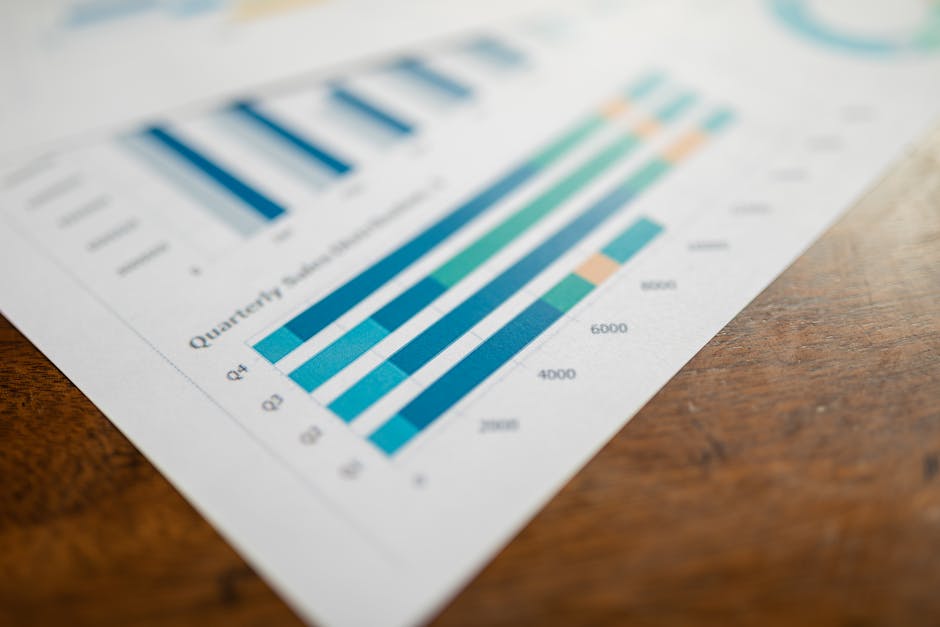
The mechanics of AI-Driven Demand Forecasting in fashion retail differ significantly from traditional statistical methods. Rather than relying solely on historical sales patterns and seasonal indices, modern AI systems ingest dozens of data streams simultaneously—point-of-sale transactions, inventory positions across channels, digital engagement metrics, social media sentiment, weather patterns, economic indicators, and even competitive pricing intelligence. This multi-dimensional approach enables the system to detect demand signals that traditional time-series models would miss entirely. For merchandising teams managing thousands of SKUs across multiple store formats and digital channels, this capability transforms how assortment planning and open-to-buy decisions get made.
The Data Foundation: What AI-Driven Demand Forecasting Actually Consumes
Understanding how these systems work starts with recognizing the data infrastructure required. At its core, AI-driven forecasting for fashion retail requires three foundational data layers. The first is transactional data at the most granular level possible—individual SKU sales by store, channel, hour, and customer segment. Unlike legacy forecasting tools that aggregated data to weekly or monthly buckets, AI models thrive on granularity. The system needs to see not just that a particular dress style sold 500 units last month, but precisely when those sales occurred, which stores moved inventory fastest, what the initial sell-through rate looked like in the first 72 hours, and how demand patterns shifted as the season progressed.
The second critical data layer involves inventory dynamics across the entire supply chain. AI-driven forecasting systems don't just predict what customers will buy—they factor in what's actually available to sell. This means ingesting real-time inventory positions at distribution centers, in-transit shipments, store backrooms, and even supplier production schedules. For retailers running omnichannel operations, this extends to understanding how inventory can flow between channels to fulfill demand. The system needs to know current weeks of supply by SKU and location, identify constraints in the fulfillment network, and incorporate lead times from suppliers. Without this inventory intelligence, even the most accurate demand prediction becomes operationally useless.
The third layer encompasses external signals that traditional forecasting ignored. Modern Retail Predictive Analytics systems pull in weather forecasts (critical for seasonal apparel), local event calendars (concerts, sports events, holidays), macroeconomic indicators (consumer confidence, employment data), competitive intelligence (promotional activity, new product launches), and digital engagement signals (website traffic patterns, social media mentions, influencer activity). The system learns which external factors actually correlate with demand shifts for specific product categories. A temperature drop might trigger jacket demand, but the AI model also learns that jacket sales peak differently in different markets based on local consumer behavior patterns.
How the Prediction Engine Actually Generates Forecasts
Once the data foundation exists, the AI forecasting engine operates through several distinct processing stages. The first stage involves pattern recognition at scale. Machine learning algorithms—typically ensemble models combining gradient boosting, neural networks, and specialized time-series forecasters—scan historical data to identify recurring patterns. But unlike simple seasonal adjustments, these models detect complex, non-linear relationships. The system might learn that a specific denim wash sells differently when promoted via Instagram versus email, or that certain dress styles experience demand surges exactly 48 hours after appearing on a popular streaming show.
The second processing stage focuses on feature engineering and signal separation. The AI system automatically generates hundreds of potential predictive features from raw data—lagged sales values, moving averages, trend components, calendar effects, price elasticity measures, and cross-SKU relationships. It then uses statistical techniques to determine which features actually matter for each product category. For fast-fashion retailers managing rapid inventory turns, this might mean the system learns that recent three-day sales velocity predicts near-term demand better than historical seasonal patterns. For department stores with longer selling cycles, different feature combinations prove more predictive.
Many leading retailers enhance their forecasting capabilities by partnering with specialists in custom AI solution development to ensure their models address specific merchandising challenges. The third stage generates actual forecasts at multiple time horizons and aggregation levels. The system produces daily SKU-level predictions for operational planning, weekly forecasts for in-season reforecasting and markdown optimization, and seasonal projections for assortment planning and open-to-buy calculations. Critically, the AI also generates confidence intervals and risk assessments. Rather than claiming a SKU will sell exactly 487 units next week, the system might predict 400-575 units with 80% confidence, flagging SKUs where demand uncertainty is especially high. This uncertainty quantification helps merchandising teams make better risk-adjusted decisions.
In-Season Adaptation: How AI-Driven Demand Forecasting Learns and Adjusts
The most powerful aspect of AI-driven forecasting reveals itself during the season as actual sales data arrives. Traditional forecasting treated predictions as static—you made a seasonal forecast, placed your buy, and hoped for the best. Modern AI systems continuously update predictions as new information arrives, a capability called in-season reforecasting. Every day, as point-of-sale data flows in, the AI model compares actual sales to predictions, identifies forecast errors, and adjusts future predictions accordingly.
This adaptation happens through several mechanisms. First, the system updates trend components when it detects sustained deviations from expected patterns. If a particular coat style is consistently outselling forecasts by 30%, the AI adjusts its prediction upward and flags the item for potential reorder or allocation adjustments. Second, the model recalibrates its understanding of external drivers. If weather patterns are affecting outerwear demand differently than historical patterns suggested, the system learns the new relationship and applies it to future forecasts. Third, the AI identifies anomalies that should inform predictions but not permanently shift the model—a one-time celebrity endorsement might spike dress sales temporarily without changing the underlying seasonal pattern.
For merchandising teams, this in-season learning capability transforms several core processes. Markdown cadence decisions improve because the system can predict when a SKU's sell-through trajectory indicates it will miss seasonal targets, triggering earlier promotional action. Inventory allocation between stores becomes more dynamic as the AI identifies locations where specific SKUs are outperforming or underperforming forecasts. Chase production decisions—reordering successful styles mid-season—become data-driven rather than instinct-based. H&M and Nordstrom have both publicly discussed how in-season forecast updates enable them to respond faster to customer preferences, reducing both stockouts of hot items and excess inventory of slow movers.
The Human Layer: Where Judgment Still Matters
Despite AI's analytical power, successful demand forecasting in fashion retail still requires human expertise at critical decision points. The most effective implementations treat AI as an analytical partner that augments rather than replaces merchant judgment. Merchandising teams retain several essential roles even with advanced AI systems in place.
First, humans must interpret and contextualize AI predictions within broader strategic context. The system might forecast strong demand for a particular trend, but merchandisers must decide whether that trend aligns with brand positioning, whether supply chain capacity exists to fulfill it, and whether pursuing it makes financial sense given margin targets. Second, merchants provide qualitative insights the AI cannot access—upcoming marketing campaigns, planned assortment changes, strategic vendor partnerships, or competitive intelligence that hasn't yet manifested in data. These forward-looking insights get incorporated into forecast overrides or model adjustments.
Third, experienced merchants challenge and validate AI predictions when they seem inconsistent with market realities. If the system forecasts unusually high demand for winter coats in August, a seasoned buyer might recognize this as a data anomaly rather than a genuine signal. This feedback loop—where humans question AI outputs and the data science team investigates—improves model performance over time. The best fashion retailers build collaborative planning processes where Inventory Optimization AI provides analytical baselines that merchandising teams refine using market knowledge and strategic judgment.
Integration with Downstream Planning Processes
AI-driven forecasts only create value when they connect to actual planning and execution systems. In practice, this means integrating forecast outputs with assortment planning tools, open-to-buy systems, allocation engines, and markdown optimization platforms. The forecast becomes the demand input that drives everything downstream—how much to buy, what to place in which stores, when to promote, and what price to charge.
This integration presents both technical and organizational challenges. On the technical side, forecast data must flow in real-time or near-real-time to planning systems, maintaining SKU-level granularity while also providing aggregated views for category-level decisions. The forecasting system typically outputs to a central data warehouse or planning platform where other systems consume predictions via APIs or scheduled data transfers. For retailers with legacy technology stacks, building these data pipelines often proves more challenging than implementing the AI models themselves.
Organizationally, integrated planning requires merchandising, planning, and operations teams to trust and use AI forecasts rather than reverting to spreadsheet-based approaches. This means change management—training teams to interpret forecast outputs, understand confidence intervals, and know when to apply overrides. It also requires clear governance around forecast ownership and accountability. When AI predictions prove wrong, organizations need processes to diagnose why—was the model flawed, did the data input fail, or did an unforeseeable external event occur? Retailers that successfully integrate AI forecasting typically appoint cross-functional teams responsible for monitoring forecast accuracy, investigating errors, and continuously improving the system.
Measuring Success: Forecast Accuracy and Business Impact
Evaluating AI-driven forecasting systems requires looking beyond traditional accuracy metrics to business outcomes. While technical teams measure mean absolute percentage error (MAPE) or forecast bias at the SKU level, merchandising leaders care more about operational impact. Key business metrics include sell-through rate improvements—are we moving more inventory at full price? Weeks of supply optimization—are we maintaining appropriate inventory levels without excessive overstock? Gross margin return on investment (GMROI) gains—are we achieving better financial returns on inventory investments?
Leading retailers also track forecast-driven decision quality. Did the AI correctly identify which SKUs to chase mid-season, and did those reorders perform well? Did early markdown recommendations prevent end-of-season liquidations? Did improved allocation forecasts reduce inter-store transfers and markdowns? These operational metrics reveal whether AI-Driven Demand Forecasting translates into actual merchandising performance improvements. ASOS has shared publicly that their AI forecasting initiatives contributed to double-digit improvements in sell-through rates for certain categories, demonstrating tangible business value beyond technical accuracy gains.
Conclusion: The Operational Reality of AI Forecasting
Behind the scenes, AI-Driven Demand Forecasting in fashion retail operates as a complex, multi-layered system that combines massive data integration, sophisticated machine learning, continuous in-season adaptation, and human expertise. The technology has moved well beyond experimental pilots into operational deployment at scale, fundamentally changing how merchandising teams plan assortments, manage inventory, and optimize markdowns. Yet success requires more than just implementing algorithms—it demands data infrastructure investment, process redesign, organizational change management, and clear governance.
For retailers still relying on traditional forecasting approaches, the competitive gap is widening. Companies that master AI-driven forecasting achieve measurably better inventory productivity, higher full-price sell-through, and faster response to changing customer preferences. As these capabilities mature, they're increasingly augmented by broader Generative AI for Retail applications that extend beyond forecasting into automated content creation, personalized customer interactions, and strategic scenario planning. The retailers that understand not just that AI forecasting works, but how it actually works, position themselves to extract maximum value from these transformative technologies.


Comments
Post a Comment