AI in Smart Manufacturing: Industry-Specific Applications and Use Cases
Different manufacturing sectors face distinct operational challenges that require tailored AI implementations aligned with their specific production processes, quality standards, and regulatory environments. Automotive manufacturers prioritize AI applications supporting just-in-time production and zero-defect quality protocols, while pharmaceutical facilities focus on batch traceability and regulatory compliance automation. Electronics manufacturers leverage AI for microscopic defect detection and rapid product lifecycle management, whereas food and beverage operations emphasize contamination prevention and supply chain visibility across temperature-controlled logistics networks. Understanding these industry-specific requirements proves essential for manufacturing leaders designing AI deployment roadmaps that address their sector's unique pain points while integrating seamlessly with existing SCADA systems, ERP platforms, and CMMS infrastructure.
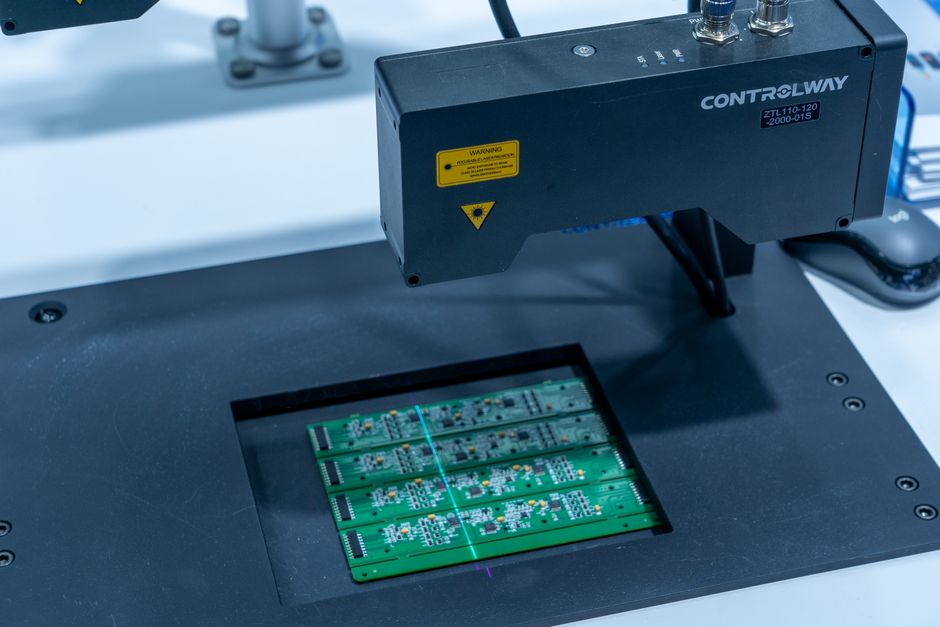
The application patterns of AI in Smart Manufacturing vary significantly across industrial sectors, reflecting differences in production methodologies, quality control requirements, and operational priorities. Automotive assembly plants implement AI-powered vision systems that inspect 150+ checkpoints per vehicle in real-time, identifying paint defects, panel alignment issues, and weld quality variations with submillimeter precision. Electronics manufacturers deploy AI algorithms that analyze X-ray imaging and thermal profiles to detect solder joint defects invisible to human inspectors, supporting Six Sigma quality standards in surface mount technology operations. Process industries including chemicals and pharmaceuticals utilize AI-enhanced process control systems that maintain reaction parameters within tight specification windows, preventing batch failures and ensuring consistent product characteristics across production runs.
Automotive Manufacturing: Advanced Robotics and Quality Automation
Automotive manufacturers represent early adopters of AI in Smart Manufacturing, with companies like General Electric implementing AI-driven predictive maintenance across robotic welding cells, stamping presses, and paint booth operations. The automotive sector's emphasis on Lean manufacturing and just-in-time production creates zero-tolerance conditions for unplanned equipment failures, making Predictive Maintenance AI essential for maintaining production continuity. AI systems monitor robotic arm performance characteristics including servo motor current draw, joint acceleration profiles, and positional accuracy, predicting component degradation 3-4 weeks before failure events that would otherwise halt entire assembly lines.
Quality control automation in automotive applications demonstrates AI's capability to inspect complex assemblies at production speed. Vision systems analyze body panel gaps measuring 3-5mm with ±0.1mm accuracy, verify VIN stamping legibility, and confirm proper installation of hundreds of components ranging from electrical connectors to interior trim pieces. These AI-powered inspection systems integrate with manufacturing execution systems to automatically route defective units to rework stations while capturing root cause data that feeds continuous improvement initiatives. The integration supports change management processes by identifying systematic quality issues within 2-3 production cycles rather than waiting for statistical process control chart signals that might lag by several shifts.
Digital Twin Applications in Vehicle Development
Automotive product lifecycle management increasingly relies on Digital Twin Technology that simulates vehicle performance under thousands of operating conditions without building physical prototypes. AI algorithms analyze simulation results to optimize component designs for manufacturability, identifying potential assembly complications or supplier quality risks before production tooling investments occur. This virtual commissioning approach reduces time-to-market by 4-6 months while minimizing engineering change orders that traditionally disrupt production ramp-up phases and complicate bill of materials management.
Electronics Manufacturing: Microscopic Defect Detection and Process Control
Electronics manufacturers face quality challenges operating at microscopic scales where traditional inspection methods prove inadequate. AI-powered optical inspection systems examine printed circuit board assemblies using high-resolution imaging that captures component placement accuracy within ±20 microns, solder joint quality assessment, and identification of contamination particles smaller than 50 microns. Companies like Siemens provide AI solutions that process inspection images at rates exceeding 100 boards per minute, generating defect classifications with 97-99% accuracy while maintaining false positive rates below 2%.
Process Optimization AI addresses the thermal management challenges inherent in surface mount technology operations where reflow oven temperature profiles must accommodate components with different thermal mass characteristics on the same board. Machine learning models analyze thermal imaging data across multiple zones to adjust conveyor speeds and heating element outputs dynamically, maintaining optimal temperature gradients that prevent cold solder joints while avoiding component damage from excessive heat exposure. When manufacturers explore custom AI development initiatives, these process control applications typically deliver measurable yield improvements within 60-90 days of deployment.
Supply Chain Visibility for Component Procurement
The electronics industry's complex supply chains involving hundreds of component suppliers create vulnerability to disruptions that can halt production lines within hours when critical parts become unavailable. AI-powered supply chain visibility platforms monitor supplier capacity, geopolitical risks, and logistics network conditions to predict potential shortages 6-8 weeks in advance. This forecasting capability enables material requirement planning teams to secure alternative sources or adjust production schedules proactively, minimizing the revenue impact of component allocation situations that have disrupted electronics manufacturing repeatedly over recent years.
Pharmaceutical Manufacturing: Compliance Automation and Batch Optimization
Pharmaceutical manufacturers operate under stringent regulatory requirements that demand complete batch traceability and real-time deviation detection throughout production processes. AI in Smart Manufacturing supports compliance automation by continuously monitoring critical process parameters against validated ranges, automatically flagging deviations that require investigation before batch release. These systems integrate with electronic batch records to provide complete documentation of temperature excursions, mixing times, and material additions, generating compliance reports that support FDA inspections and customer audits.
Process optimization in pharmaceutical operations focuses on maximizing batch yield while maintaining product quality attributes within specification. AI algorithms analyze historical batch data encompassing thousands of production runs to identify parameter combinations that consistently produce optimal results. Machine learning models detect subtle correlations between raw material properties, processing conditions, and final product characteristics that human process engineers might overlook in traditional statistical analysis. This insight generation supports continuous improvement initiatives that incrementally increase yields by 3-5% annually while reducing batch cycle times through optimized mixing, drying, and coating sequences.
Food and Beverage: Contamination Prevention and Quality Consistency
Food and beverage manufacturers implement AI-powered vision systems that inspect packaging integrity, verify proper labeling, and detect foreign material contamination at speeds matching high-volume production lines processing 500+ units per minute. These quality control automation systems identify issues including improperly sealed containers, missing or incorrect labels, and product color variations that might indicate formulation problems or equipment malfunctions. The AI models learn normal appearance characteristics during training phases, then flag anomalies requiring human verification before products proceed to distribution channels.
Process control applications in food manufacturing maintain consistency across production batches by monitoring ingredient mixing ratios, cooking temperatures and durations, and cooling profiles. AI algorithms adjust process parameters to compensate for ingredient variability, ensuring that finished products meet sensory characteristics and nutritional specifications regardless of natural variations in agricultural raw materials. This consistency proves essential for brand reputation management and consumer satisfaction, particularly in categories where taste, texture, and appearance directly influence purchasing decisions.
Cold Chain Monitoring and Logistics Optimization
Supply chain visibility takes on critical importance in food and beverage operations where temperature excursions during transportation and storage cause product spoilage and safety risks. AI systems analyze data from IoT-enabled temperature sensors throughout distribution networks, predicting refrigeration equipment failures and identifying logistics routes where ambient conditions pose risks to product integrity. This predictive capability enables logistics teams to reroute shipments proactively and schedule preventive maintenance on refrigeration units before failures occur that would compromise entire truckloads of temperature-sensitive products.
Aerospace Manufacturing: Precision Machining and Non-Destructive Testing
Aerospace manufacturers implement AI applications supporting the extreme precision and quality documentation requirements inherent in producing components for safety-critical applications. Predictive Maintenance AI monitors CNC machining centers performing operations on titanium alloys and composite materials where tool wear directly affects dimensional accuracy and surface finish. Machine learning models analyze spindle vibration, cutting force variations, and acoustic emissions to predict optimal tool change intervals, preventing scrapped parts that might cost $50,000-$500,000 in materials and machining time.
Non-destructive testing automation represents another aerospace application where AI processes ultrasonic, radiographic, and computed tomography scan data to identify internal defects including voids, delaminations, and inclusions. These AI systems achieve defect detection rates comparable to Level III certified human inspectors while processing scan data 10-15 times faster, supporting throughput requirements without compromising quality assurance protocols. The automated analysis generates detailed defect reports with precise location data that guides repair decisions and provides traceability documentation required by aviation regulatory authorities.
Heavy Equipment Manufacturing: Advanced Robotics Integration and Assembly
Manufacturers producing construction equipment, mining machinery, and agricultural implements face challenges assembling large, complex products with significant component weight and dimensional variation. AI-powered robotic systems equipped with force-torque sensors and vision guidance adapt to part variations in real-time, adjusting grip positions and assembly trajectories to accommodate tolerance stack-ups that would require manual intervention with conventional programmed robotics. These adaptive capabilities prove essential in operations where cast components exhibit dimensional variations of ±5-10mm, requiring intelligent compensation during mating operations.
Digital Twin Technology supports virtual commissioning of heavy equipment assembly lines, enabling manufacturers to validate robotic work cell layouts and identify potential reach limitations or collision risks before investing in physical installation. The simulation environment allows process engineers to optimize assembly sequences, minimizing crane movements and component staging requirements that affect production cycle times. This virtual planning approach reduces assembly line commissioning periods from 6-8 weeks to 2-3 weeks while identifying ergonomic improvements that reduce injury risks for assembly technicians working alongside collaborative robots.
Integration Strategies Across Manufacturing Sectors
Successful AI in Smart Manufacturing implementations require careful integration with existing ERP systems, SCADA infrastructure, and manufacturing execution platforms that vary by industry. Automotive manufacturers typically operate highly integrated environments where AI systems must exchange data with supplier networks through EDI interfaces and support complex BOM management for products with 3,000-5,000 components. Pharmaceutical facilities prioritize validated systems where AI algorithm changes require formal change management protocols and regulatory documentation. Electronics manufacturers need AI platforms capable of processing inspection data at line speeds while maintaining low latency that prevents production bottlenecks.
Organizations planning AI deployments benefit from phased implementation approaches that begin with focused applications addressing specific pain points rather than attempting enterprise-wide transformations simultaneously. Starting with predictive maintenance pilot programs allows manufacturing teams to build AI literacy, establish data infrastructure, and demonstrate ROI before expanding into process optimization and quality control automation domains. This measured approach supports organizational change management while generating early wins that build stakeholder confidence in AI's value proposition for their specific industry context.
Conclusion: Industry-Tailored AI Implementation Strategies
The diverse applications of AI in Smart Manufacturing across automotive, electronics, pharmaceutical, food and beverage, aerospace, and heavy equipment sectors demonstrate that successful AI deployment requires deep understanding of industry-specific processes, quality standards, and operational priorities. Manufacturing leaders evaluating AI investments must look beyond generic capability claims to examine how AI solutions address their sector's particular challenges—whether those involve microscopic defect detection in electronics, regulatory compliance automation in pharmaceuticals, or adaptive robotics in heavy equipment assembly. The most effective implementations align AI capabilities with existing Industry 4.0 infrastructure including SCADA systems, CMMS platforms, and ERP integrations while supporting established methodologies like Lean manufacturing, Six Sigma, and Agile manufacturing principles. As organizations across manufacturing sectors continue advancing their AI maturity, some also explore adjacent applications including Generative AI Financial Solutions that optimize capital planning and financial forecasting for ongoing technology investments. By maintaining focus on industry-specific requirements and measurable operational outcomes, manufacturers position themselves to capture AI's full value potential while building sustainable competitive advantages in their respective markets.


Comments
Post a Comment